
I used dashboards and inbox to reduce client support calls by 90%
Antoine Thomas, founder of West 7th Design Studio, shares how he reduced client support calls by 90% and saved 15 hours per week using Plutio dashboards, automation, and integrated communication.
The amount of TV I've been able to binge-watch has been amazing. This is what people do when they stop working. Cool!
Running a design studio since 2009
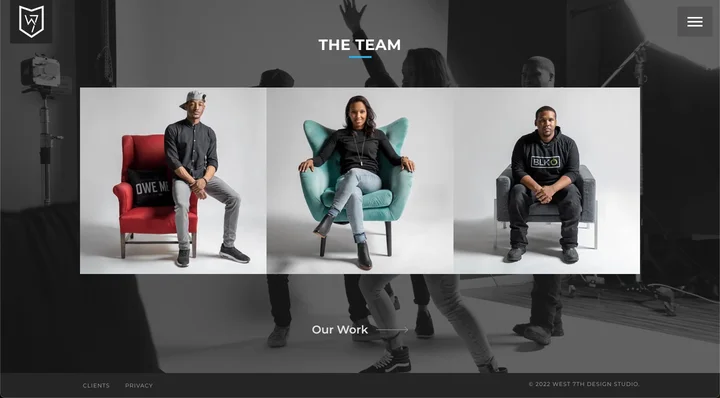
Antoine Thomas has been running West 7th Design Studio since 2009. Over the years, his award-winning branding agency has built an impressive client roster that includes the NAACP DC Branch and the Howard University Cancer Center.
What makes w7th different from other design studios isn't just the quality of their work - it's Antoine's deeply human-centered approach to everything. He's people-focused through and through. Every brand strategy, every design decision, every client relationship is built around genuine human connection.
But here's the paradox of running a people-focused business: the more clients you take on, the more time you spend on administrative work. And the more time you spend on admin, the less time you have for the actual people and creative work that made your business successful in the first place.
Antoine needed to solve this problem. And for years, he struggled to find the right solution.
The long search for a system that works
In the early days, w7th had no real system at all. No formal invoicing. No centralized project management. No unified way to communicate with clients. Everything was scattered.
The first attempt at fixing this was a "home-grown" web portal built by a friend. It worked fine for a while, but as the studio grew, the limitations became painful. Building your own tools from scratch means constantly balancing client work with system maintenance - and something always gets sacrificed.
So Antoine switched to a third-party platform. For a couple of years, things were stable. Then support essentially disappeared overnight. Things would break and take weeks to get a response - if anyone responded at all. The reporting function stopped working. The messaging system was unreliable. Antoine found himself going into the back-end and making his own updates again, right back where he started.
By the time he discovered Plutio, Antoine was frustrated and exhausted. He'd been burned twice before. So he approached the trial carefully - testing it with his team and a long-term client before committing.
This time, something felt different. It actually worked.
Finding a platform built with users, not for them
What drew Antoine to Plutio wasn't just the features - it was the approach. Plutio is built with direct feedback and input from its user community. Antoine could meet the founder. He could join the community, share thoughts, see how other creative business owners were using the platform.
This wasn't a rigid tool where you had to adapt your workflow to fit the software. It was flexible enough that Antoine could adapt it to fit exactly how w7th needed to operate.
Over time, he's customized Plutio into something that rivals systems used by much larger corporate design studios - complete with automation, custom dashboards, and integrations that keep everything running smoothly.
The dashboard setup that changed everything
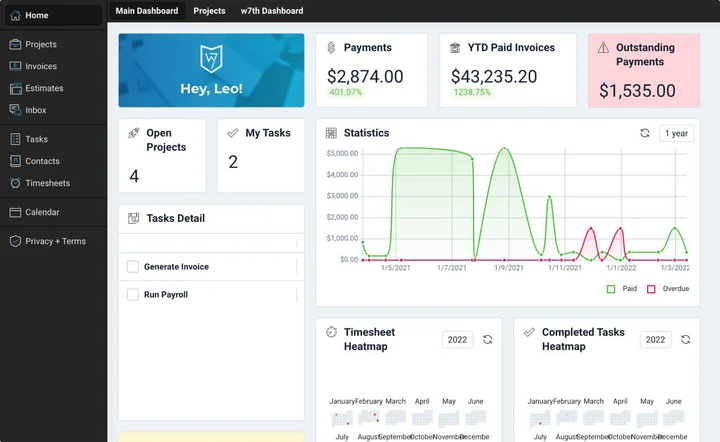
Antoine starts every morning the same way: checking his dashboards. At a glance, he can see everything that matters - payments coming in, outstanding invoices, project status across the entire studio.
In the old portal, only Antoine had a dashboard. His team members and clients couldn't see anything. Now, everyone gets a personalized view based on their permissions. Clients log in and immediately see their project status. Team members see exactly what they need to focus on. Antoine sees the health of the entire business.
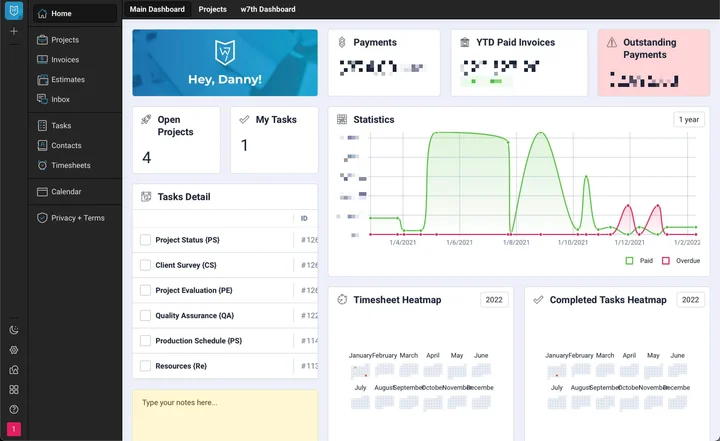
He has three main dashboards set up:
The Main Dashboard shows the financial health of the business: payments, YTD paid invoices, outstanding amounts, overdue invoices over time. He can walk in Monday morning and immediately know where things stand.
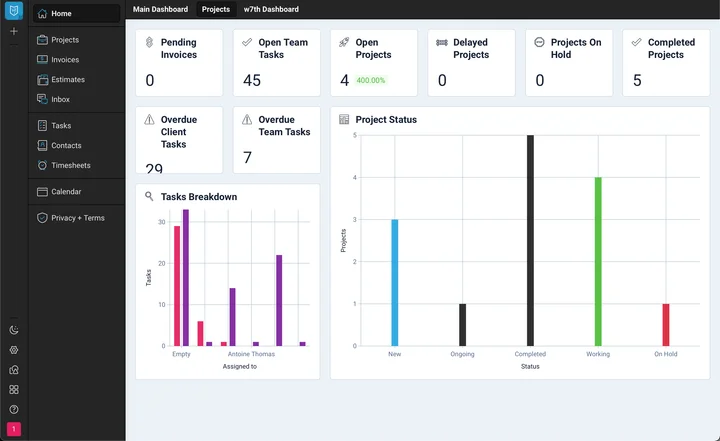
The Projects Dashboard gives Antoine a feel for where everyone is on active work. How many tasks are assigned? Which projects are on hold? What's overdue? He doesn't need to chase people down for status updates anymore - it's all right there.
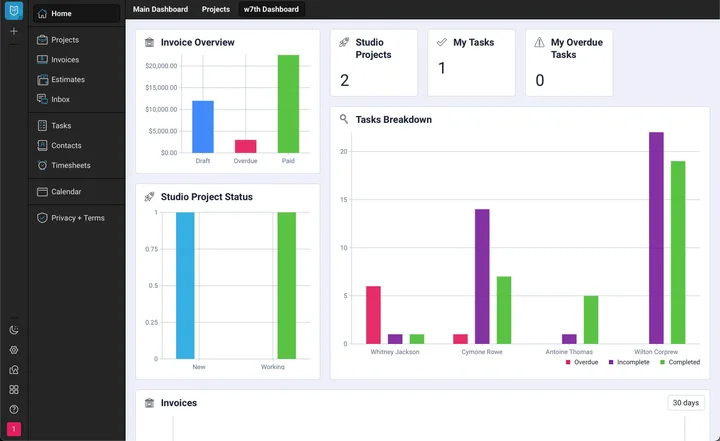
The Studio Dashboard focuses specifically on internal projects - the work that keeps the agency itself running. Every internal task, how long it's been assigned, who's working on it.
Automation that rivals larger agencies
If you've ever worked at a large corporate agency, you've probably seen how complex their automation systems can get. Project IDs that encode information about project type and team. Automatic folder structures. Task workflows that trigger based on specific criteria.
Antoine has built all of that for w7th using Plutio and Integromat.
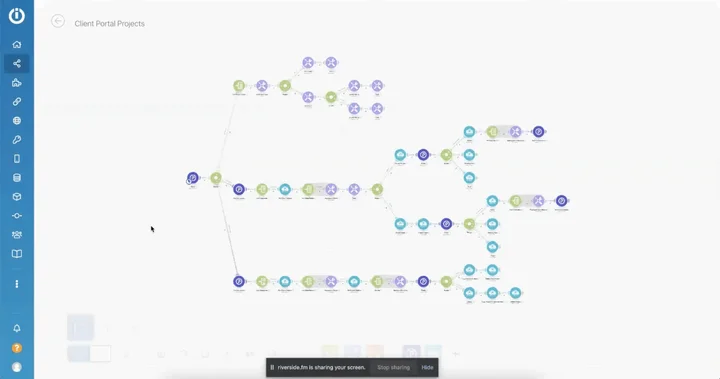
When a new project is created, several things happen automatically:
First, a complete folder structure gets created in pCloud - Client, Project, Admin, Working, and Final Files folders. Everyone on the team immediately has a place to put their assets, invoices, contracts, and deliverables.
Second, a Project ID is generated that encodes what type of work the project involves, when it was created, and which team should be working on it. This makes financial reporting and project organization much cleaner.
Third, a group conversation is automatically created with the client and all project team members. No one needs to manually set up communication channels - everyone is on the same page from day one.
Keeping clients in the loop automatically
West 7th has an in-house project manager who keeps track of everything happening across the studio. But even with a dedicated PM, client communication used to be a constant drain on time.
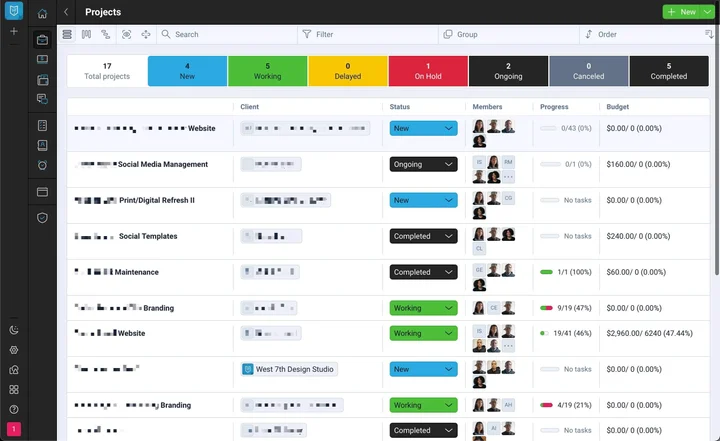
Now, communication is built into the workflow itself. Antoine has created message snippets for every stage of a project - client onboarding, project started, project update, project delayed, project completed. The PM can send a professional, consistent update in seconds.
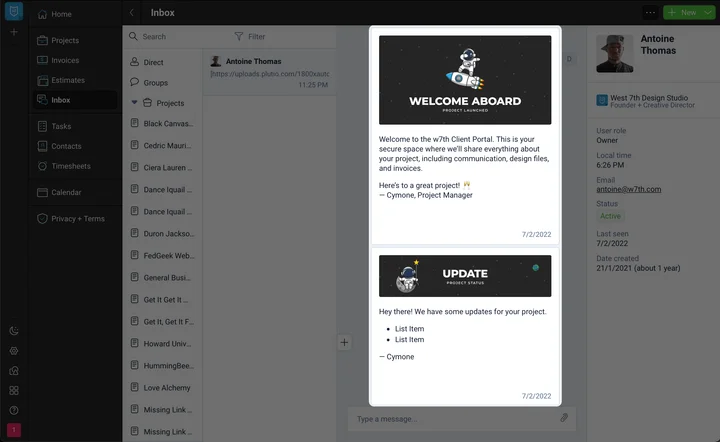
During client onboarding, everyone gets walked through exactly how to check their project status and communicate with w7th through the platform. They don't need to call for updates anymore - everything they need is in their dashboard.
Budget tracking that keeps projects profitable
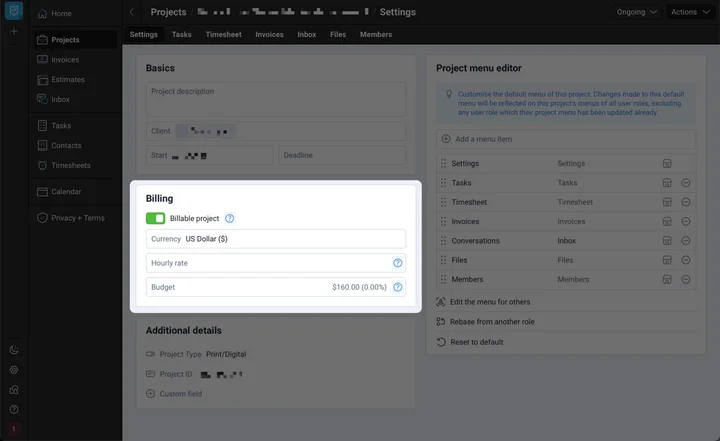
One feature that's made a real difference to w7th's profitability is project budget tracking. Antoine can see exactly how much of a project's budget has been used at any point.
In his Monday project manager meetings, he can ask the question that matters: "We've used 23% of the budget for this project. Are we 23% done?" If the answer is no, they can course-correct before the project goes over budget.
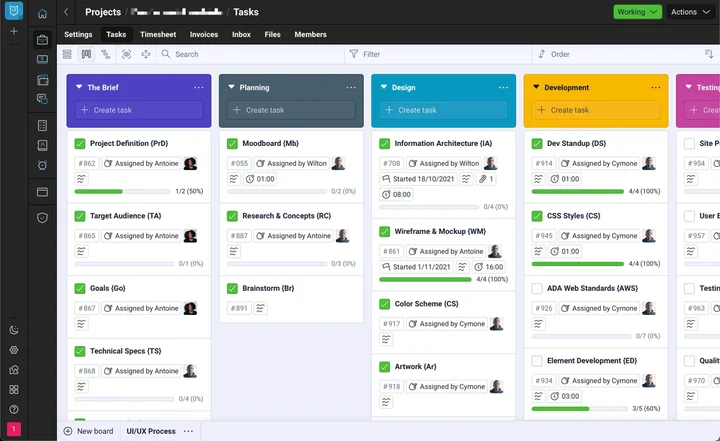
Tasks are also created and assigned automatically when projects start, with workflows tailored to each project type. There's even an automatic task assigned to the PM to plan out the project timeline - nothing falls through the cracks.
The results: 90% fewer calls, 15 hours saved weekly
The numbers speak for themselves. Since switching to Plutio, Antoine estimates that unnecessary client communication has dropped by 90%. Clients still call occasionally to confirm they "did the thing right" - but the constant stream of status check-ins has essentially disappeared.
Personally, Antoine saves about 15 hours every week compared to his previous setup. That's not just valuable for the business - it's valuable for his life. He can watch TV, read a book, play with his dog. He can actually relax without the nagging feeling that he's forgetting something important for his team or clients.
I can enjoy life outside of work without feeling guilty. That's an amazing feeling.
And starting each day by checking dashboards means Antoine always has his finger on the pulse of the business. He knows exactly where revenue stands, which projects need attention, and what tasks are overdue - all before his first meeting of the day.
The bottom line
Running a design studio is about creative work and human connection. Antoine built West 7th Design Studio around those principles - but for years, administrative overhead kept getting in the way.
Now, with the right systems in place, he can focus on what actually matters: fostering his team, growing the studio, and doing great work for clients who appreciate it.
Plutio has been amazing for my studio. I'm excited to see what the future holds.
If you'd like to see more of West 7th's work, visit w7th.com.
Start free today
Your entire business, one login away
No credit card required. No contracts. Just the tools you need to run, grow, and automate your business with Super Work AI.
No credit card required


